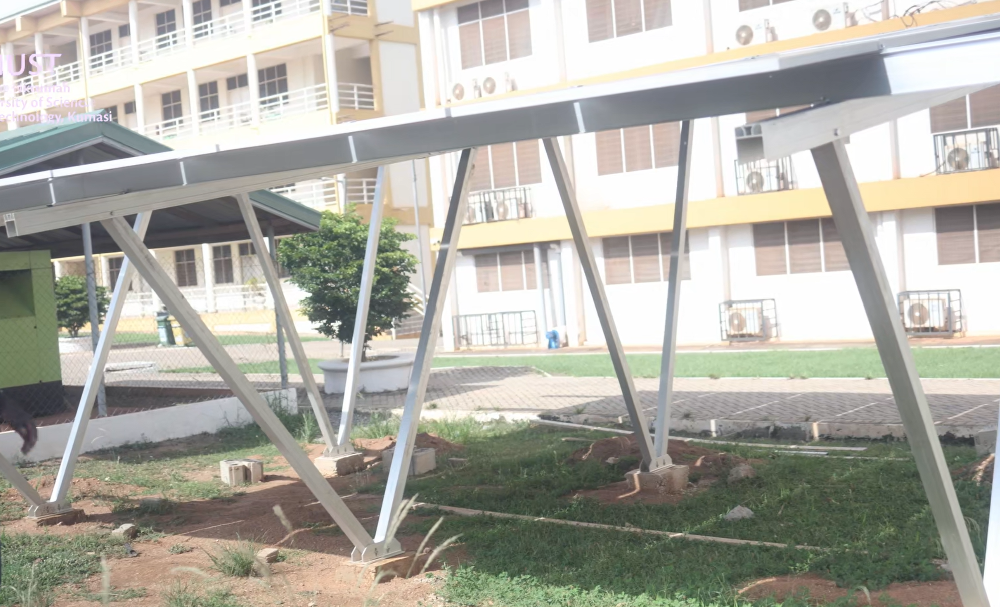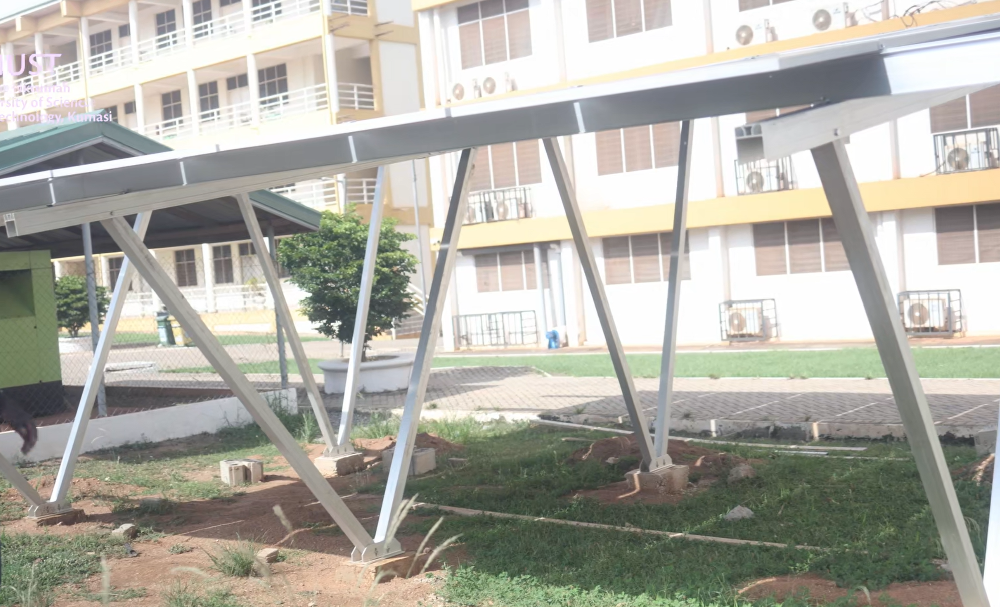
Small businesses in Ghana get the most stable and appliance-safe electricity when they rely solely on solar power, according to a new study at the Kwame Nkrumah University of Science and Technology, Kumasi (KNUST), comparing solar PV, hybrid solar–grid systems, and national grid supply in a typical SME setting.
The research, published in 2025 in the Journal of Energy by MPhil Graduate, Mr. Godwill Nkrumah Yeboah and colleagues under the supervision of Prof. Richard Opoku, analyzed electricity supply in a laundry shop in Ghana over a four-month period, using data logs to track critical indicators including voltage stability, frequency, power factor, voltage fluctuations, and factors that directly influence how well machines function and lifespan.

Explaining the motivation behind the study, Mr. Yeboah noted that frequent power challenges faced by small businesses inspired the research.
“This topic on solving problems for SMEs was chosen because we realized there have been a lot of power challenges with respect to their business operation,” he said.
He noted that commonly used alternatives such as generators, automatic voltage regulators (AVRs), and surge protection devices (SPDs) often fail to provide lasting solutions.
“When there’s an outage and you switch to a generator while equipment is in operation, you introduce new risks. High voltages are also unpredictable and can easily damage equipment,” he explained.
The study found that solar photovoltaic (PV) systems maintained stable voltage and frequency levels with minimal fluctuations, significantly reducing the risk of damage to sensitive equipment. In contrast, the national grid recorded frequent voltage sags, swells, and interruptions, which can degrade appliances and disrupt business operations, while the hybrid solar–grid system served as a middle-ground solution, offering backup during low sunlight periods.
The findings of the study also highlighted a growing concern for SMEs that depend heavily on consistent power. Mr. Yeboah noted that poor power quality from the national grid does not only interrupt work but also increases maintenance and replacement costs for equipment.
“One piece of equipment can cost around 12,000. Within six months, some businesses end up spending over 40,000 replacing damaged machines. That same money could be invested in a solar setup that lasts for years without issues,” Mr. Yeboah said.
The researchers concluded that solar PV systems offer a viable pathway for improving power reliability and protecting business assets, particularly for energy-dependent enterprises.
“And we also realized that if you rely solely on solar, it was very efficient. You're getting good energy output. The others were not good option,” he noted.
Story: Belinda Opoku Danso