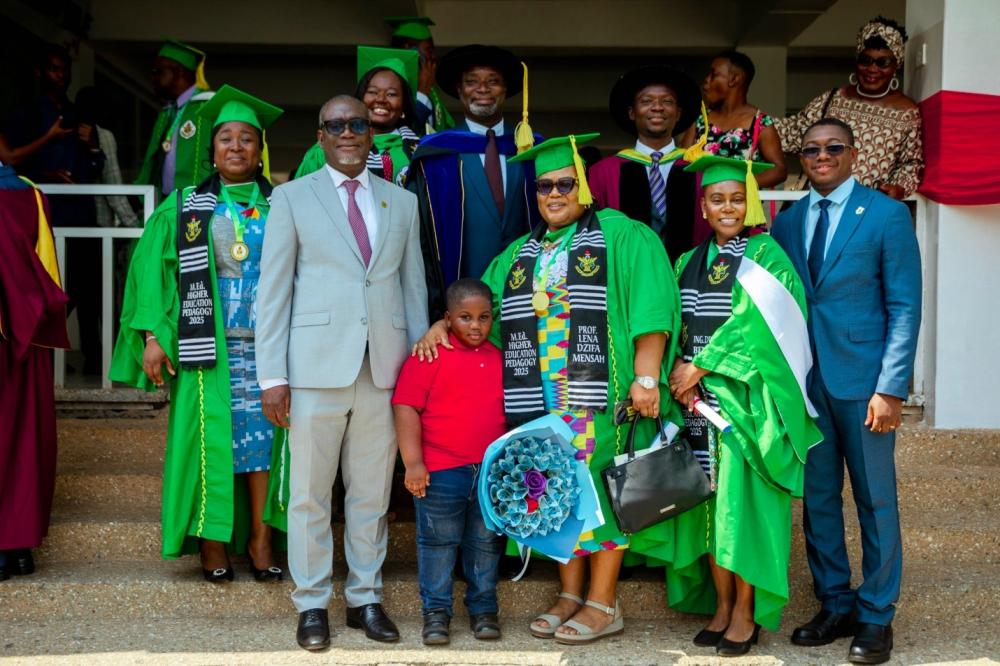
"Nimdeɛ nni awiei", there is no end to learning! This timeless Akan wisdom found powerful expression in November 2025 when four distinguished faculty members of the Faculty of Mechanical and Chemical Engineering (FMCE) walked across the stage at the Great Hall during KNUST's 59th Congregation. Prof. Lena Dzifa Mensah, Dr. (Mrs) Bennetta Koomson, Dr. (Mrs) Mizpah Ama Dziedzorm Rockson, and Dr. (Mrs) Emmanuela Kwao-Boateng, each already accomplished in their respective fields, had chosen to become students once more, earning a Master of Education in Higher Education Pedagogy.
The decision to pursue this qualification speaks volumes about their commitment to excellence. These are not academics resting on their laurels. Prof. Lena Mensah, whose research spans industrial engineering, renewable energy, and waste-to-energy transformation, serves on the Advisory Board of KNUST's Office of Grants and Research. Dr. Koomson, a fellow of UNESCO's Organization of Women in Science for the Developing World, recognized globally for her work in hydrometallurgy, sustainable mining, and environmental management. Dr. Rockson, currently the College of Engineering's Examination Officer and an active researcher on municipal solid waste management, recycling, waste-to-energy systems, and sustainable waste treatment processes. Dr. Kwao-Boateng, known to many as the Quiz Mistress for the Ghana National Gas Challenge and Patron of Women in Engineering at KNUST, specializes in petrochemistry and crude oil refining.
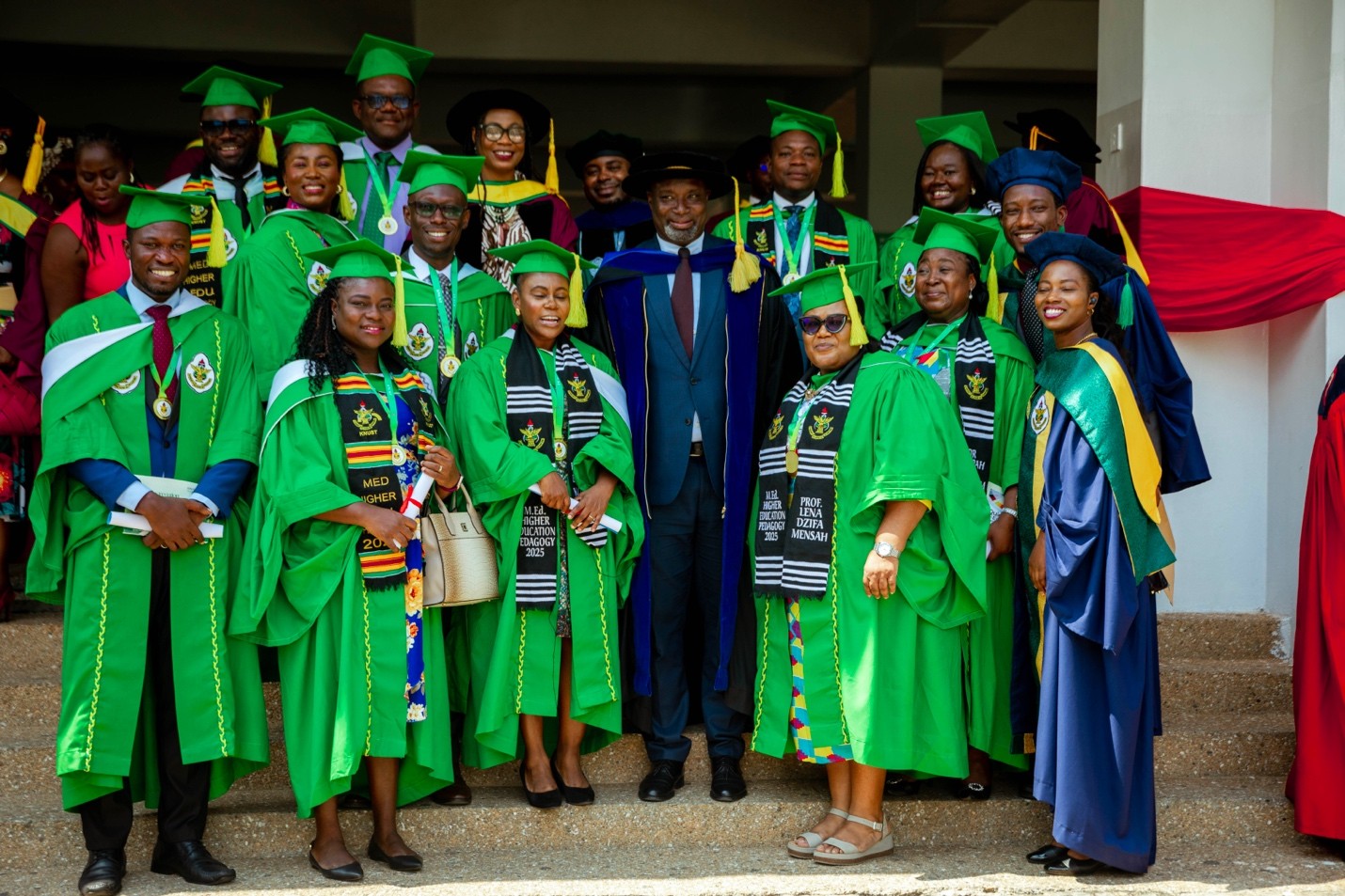
Yet despite their impressive credentials and demanding responsibilities, all four recognized something crucial: technical expertise alone does not guarantee transformative teaching. The classroom is its own laboratory, requiring its own specialized knowledge. Their pursuit of the MEd in Higher Education Pedagogy demonstrates a profound understanding that great engineers can become even greater educators when equipped with advanced pedagogical frameworks, innovative instructional strategies, and evidence-based approaches to curriculum design.
This investment in their teaching craft carries implications far beyond their individual classrooms. As active members of the Ghana Institution of Engineering and Women in Engineering, these faculty members already serve as role models and mentors to countless students, particularly young women entering engineering fields. Now armed with cutting-edge pedagogical tools, they are positioned to reshape how engineering is taught at KNUST, creating more engaging learning experiences, developing more effective curricula, and ultimately producing graduates better prepared for the challenges of modern engineering practice.
The college celebrates not just their academic achievement, but what it represents: a commitment to continuous growth, a recognition that teaching matters as much as research, and a willingness to be vulnerable as learners even while serving as leaders. As these four remarkable women integrate their new expertise into their teaching practice, the entire College stands to benefit. Their example reminds us all that in academia, as in the Akan proverb that inspired this journey, learning truly has no end, and that is precisely what makes it so powerful.